

Step by Step Physiotherapy Guide for Pain Relief
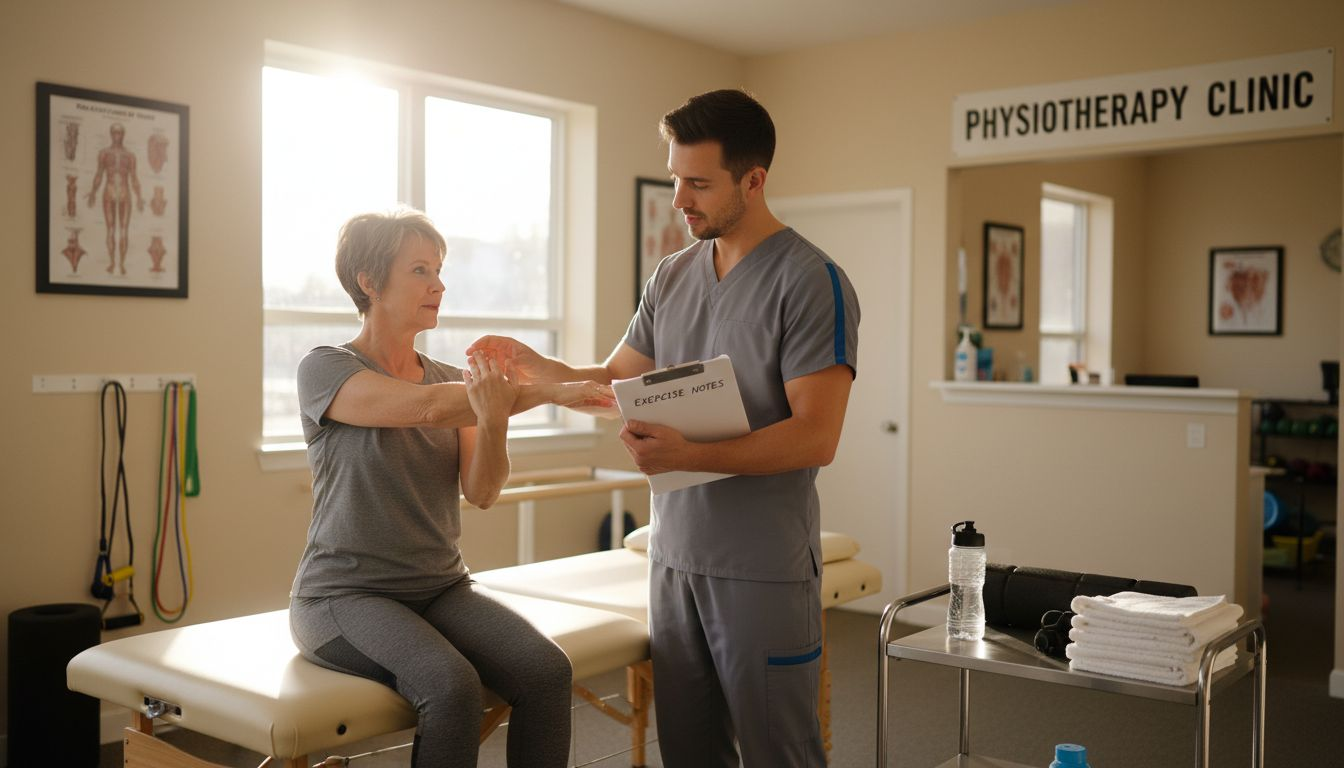
Chronic musculoskeletal pain affects up to 1 in 5 Canadian adults, yet most residents of Ottawa and Carleton Place never receive a personalized physiotherapy plan tailored for lasting recovery. Ignoring early symptoms often leads to worsening mobility and increased risk of future injuries. This detailed evidence-based guide reveals how a step-by-step approach empowers you to accurately assess pain, set achievable goals, and build the foundation for a safer, more effective physiotherapy journey.
Table of Contents
Quick Summary
Key Point | Explanation |
1. Document Your Pain Accurately | Use a numerical scale and body diagrams to detail pain intensity and locations, aiding healthcare professional assessments. |
2. Set SMART Goals for Recovery | Establish specific, measurable, achievable, relevant, and time-bound goals to guide your physiotherapy journey effectively. |
3. Create a Suitable Home Environment | Organize your home workspace to facilitate exercise, ensuring safety and comfort during your rehabilitation. |
4. Track Progress Regularly | Maintain a detailed record of exercises, pain levels, and mobility to facilitate adjustments to your treatment plan. |
5. Consult Your Physiotherapist Frequently | Regular communication about changes in your condition enables tailored adjustments and enhances the effectiveness of your treatment. |
Step 1: Assess Your Current Pain and Mobility
Accurately assessing your pain and mobility is the foundational first step in developing an effective physiotherapy treatment plan. By systematically understanding your current physical condition, you enable healthcare professionals to create a targeted approach tailored precisely to your needs.
Begin your assessment by carefully documenting your pain using established clinical methods. Multidimensional pain evaluation tools provide comprehensive insights into your pain experience. Start by rating your pain intensity on a standard 0 to 10 scale, where 0 represents no pain and 10 signifies the most extreme pain imaginable. Next, map your pain location using a body diagram, marking specific areas of discomfort, noting whether the pain is sharp, dull, burning, or intermittent.
Proceed with mobility testing by performing gentle range of motion exercises that reveal your current functional limitations. Track movements that trigger pain, noting the specific joint or muscle group involved. Record how long you can maintain certain positions and identify any movements that cause significant discomfort. This detailed documentation helps physiotherapists understand the precise nature of your mobility challenges.
Expert Tip: Keep a detailed pain and movement journal in the week leading up to your physiotherapy assessment to provide your healthcare provider with the most accurate and comprehensive information possible.
Here is a summary of common pain and mobility assessment methods and their unique purpose:
Assessment Method | Measures | Example Use |
Numerical Pain Scale | Pain intensity (0-10) | Rating back pain severity |
Body Diagram Mapping | Pain location & quality | Identifying shoulder pain zones |
Range of Motion Test | Joint flexibility | Tracking knee extension limits |
Functional Movement Test | Daily task ability | Observing walking discomfort |
Step 2: Set Personalized Physiotherapy Goals
Establishing personalized physiotherapy goals is a critical step in creating a targeted and effective treatment plan that addresses your unique health needs. Your goals will serve as a roadmap for recovery, guiding both you and your physiotherapist towards meaningful progress.
To develop meaningful goals, start by identifying precise functional objectives that align with professional physiotherapy standards. Consider your daily activities, lifestyle requirements, and specific physical limitations. Are you aiming to return to a particular sport? Reduce chronic pain? Improve mobility for work or personal tasks? These specific objectives will help your physiotherapist craft a tailored approach that resonates with your personal health journey.
Work collaboratively with your physiotherapist to establish goals that are specific, measurable, achievable, relevant, and time-bound (SMART). Break down larger objectives into smaller, incremental milestones that allow you to track progress and maintain motivation. Your physiotherapist will help you set realistic expectations, considering your current physical condition and potential recovery trajectory.
Expert Tip: Write down your physiotherapy goals and review them regularly with your healthcare provider to ensure they remain relevant and motivating throughout your recovery process.
This table outlines how SMART goals enhance physiotherapy outcomes:
SMART Characteristic | Purpose | Example Goal |
Specific | Targets a clear outcome | Walk 500 metres pain-free |
Measurable | Allows for tracking | Increase hip rotation by 10 degrees |
Achievable | Suits current capacity | Complete 10 squats daily |
Relevant | Matches daily needs | Improve standing for work tasks |
Time-bound | Has a clear deadline | Achieve within 4 weeks |
Step 3: Prepare Your Home and Schedule
Preparing your home environment and organizing your schedule are crucial steps in ensuring a smooth and effective physiotherapy journey. These preparations will help you maximize your treatment potential and create an optimal setting for recovery.
Home workspace organization is fundamental to supporting your physiotherapy treatment. Clear a dedicated space that allows comfortable movement and accommodates potential exercise equipment or therapy tools. Ensure the area has adequate lighting, minimal clutter, and enough floor space for stretching and performing recommended exercises. Remove potential tripping hazards like loose rugs or electrical cords, and have a sturdy chair or support nearby for balance assistance during mobility exercises.
Aligning your schedule requires strategic planning to integrate physiotherapy consistently into your daily routine. Block out specific times for exercises, rest periods, and potential treatment sessions. Consider your energy levels throughout the day and schedule more demanding activities when you feel most rested. Communicate with family members or housemates about your physiotherapy commitments to create a supportive environment that respects your recovery process.
Expert Tip: Create a visual calendar or digital reminder system to track your physiotherapy exercises and appointments, helping you maintain consistency and motivation throughout your rehabilitation journey.
Step 4: Execute Prescribed Physiotherapy Exercises
Successfully executing your prescribed physiotherapy exercises is a critical component of your recovery journey, requiring precision, consistency, and mindful engagement with each movement. This step transforms your treatment plan from theoretical recommendations into practical actions that support healing and functional improvement.
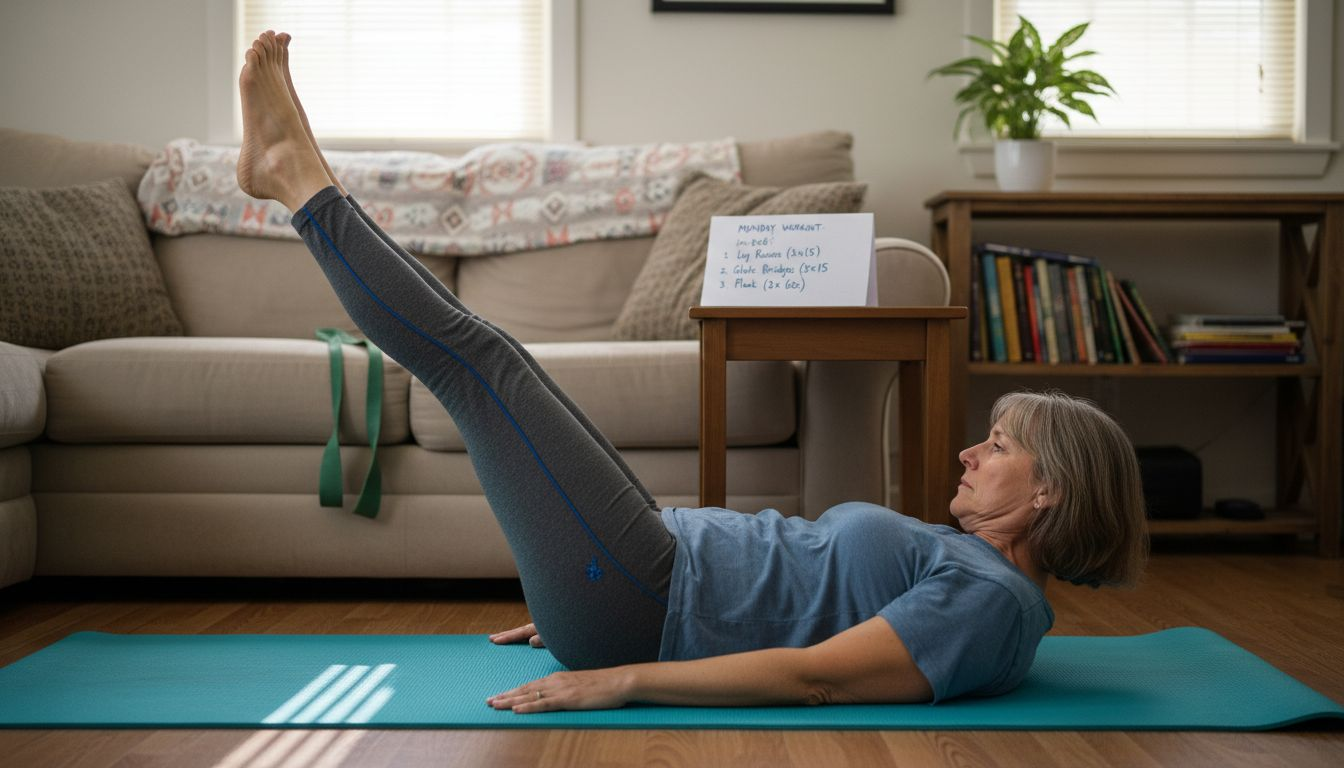
Evidence-informed exercise protocols demand careful implementation and patient understanding. Begin by thoroughly reviewing the specific instructions provided by your physiotherapist, paying close attention to proper form, repetition count, and range of motion. Start slowly, focusing on technique over intensity. If an exercise causes unexpected pain or discomfort, stop immediately and consult your healthcare provider. Maintain a neutral body alignment, engage your core muscles, and breathe steadily throughout each movement to maximize effectiveness and minimize injury risk.
Progress through your exercise routine systematically, tracking your performance and noting any changes in comfort or mobility. Use a journal or digital app to record repetitions, difficulty levels, and any sensations experienced during exercises. This documentation helps your physiotherapist assess your progress and potentially adjust your treatment plan. Remember that consistency is more important than perfection consistently performing your prescribed exercises will yield more significant long term results than sporadic intense efforts.
Expert Tip: Create a dedicated workout space with necessary supportive equipment and set a consistent daily time for your exercises to build a sustainable rehabilitation routine.
Step 5: Track Progress and Adjust Activities
Tracking your physiotherapy progress is a dynamic process that empowers you to actively participate in your recovery journey. By systematically monitoring your improvements and challenges, you create a collaborative pathway with your healthcare provider towards optimal healing.
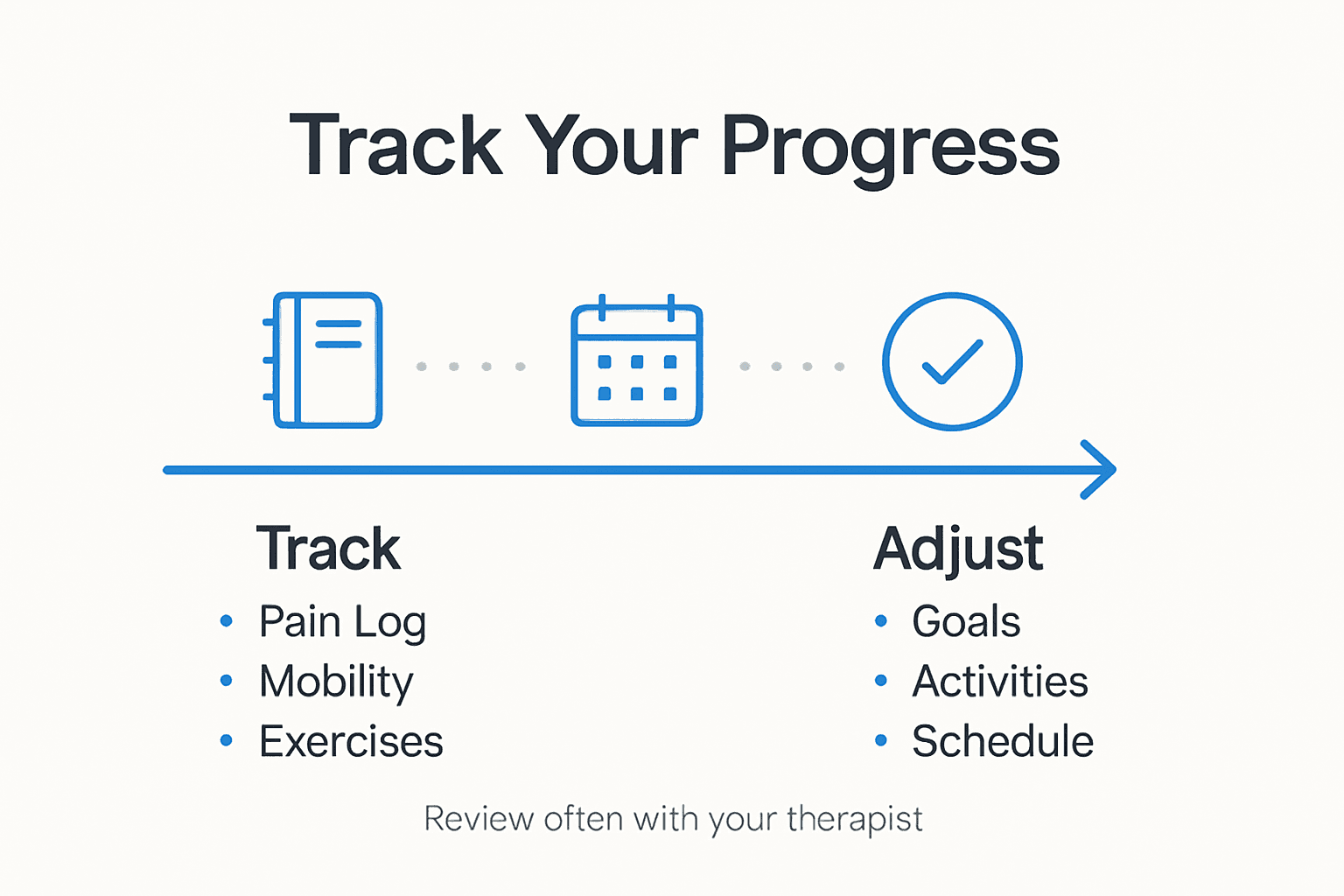
Comprehensive progress tracking involves using validated measurement tools and ongoing patient feedback. Begin by establishing baseline measurements for pain levels, range of motion, and functional capacity. Use a consistent tracking method such as a digital app or physical journal to record daily exercise performance, noting specific details like repetition counts, perceived difficulty, and any changes in pain or mobility. Pay close attention to both subtle and significant improvements, understanding that recovery is rarely linear and often includes periods of plateau or minor setbacks.
Regularly communicate your documented progress with your physiotherapist during follow up appointments. Be prepared to discuss specific observations about your body’s response to prescribed exercises, including any movements that feel particularly challenging or uncomfortable. This open dialogue allows your healthcare provider to make informed adjustments to your treatment plan, potentially modifying exercise intensity, introducing new techniques, or addressing unexpected physical responses. Your active participation and detailed documentation are crucial in creating a responsive and personalized rehabilitation strategy.
Expert Tip: Take progress photos or videos of your exercise techniques to visually track your movement improvements and share objective evidence with your physiotherapy team.
Step 6: Verify Pain Relief and Improved Function
Verifying your pain relief and functional improvements represents the most critical stage of your physiotherapy journey, transforming theoretical treatment into measurable physical progress. This step allows you to objectively assess the effectiveness of your rehabilitation strategy and celebrate your healing milestones.
Systematic pain assessment using validated measurement tools provides comprehensive insights into your recovery progression. Begin by comparing your current pain levels and mobility against the baseline measurements established during your initial assessment. Utilize standardized pain scales that quantify discomfort intensity, documenting changes in sensation, range of motion, and overall physical performance. Pay attention to both quantitative metrics like pain scores and qualitative improvements such as increased ease of movement or reduced daily limitations.
Engage in a detailed consultation with your physiotherapist to review your documented progress. Discuss specific changes in your physical capabilities, noting improvements in activities that were previously challenging. Be prepared to demonstrate your enhanced mobility, share your tracking records, and collaboratively evaluate whether your current treatment plan requires adjustment. Remember that recovery is a dynamic process and small, consistent improvements are just as significant as dramatic transformations.
Expert Tip: Create a visual progress chart that tracks your pain levels and functional achievements, helping you maintain motivation and providing tangible evidence of your rehabilitation journey.
Take Control of Your Pain with Expert Physiotherapy Support
If you are following the “Step by Step Physiotherapy Guide for Pain Relief,” you already know how important it is to assess your pain accurately, set personalized goals, and consistently perform prescribed exercises. Persistent pain and limited mobility can deeply affect your quality of life, making everyday activities a challenge. At Integrate Ottawa, we understand these struggles and offer a team-based, evidence-supported approach to help you regain function and reduce discomfort safely and effectively.

Discover comprehensive physiotherapy services tailored to your unique needs with Integrate Ottawa. Our dedicated healthcare professionals collaborate closely to develop personalized treatment plans that incorporate pain assessment, goal planning, and progress tracking. Why wait to start feeling better? Book your appointment today and take the essential step towards improved mobility and lasting pain relief.
Frequently Asked Questions
What are the first steps in assessing my pain and mobility for physiotherapy?
Accurately assess your pain and mobility by documenting your discomfort using a numerical pain scale and body diagram. Start by rating your pain from 0 to 10 and mapping it on a diagram, noting specific qualities like sharp or dull. This information will be essential for your physiotherapist to tailor your treatment plan.
How can I set personalized physiotherapy goals?
To set personalized physiotherapy goals, identify specific objectives that align with your health needs, such as returning to a sport or reducing pain. Work collaboratively with your physiotherapist to ensure your goals are specific, measurable, achievable, relevant, and time-bound (SMART) so you can track your progress over time.
What should I do to prepare my home for physiotherapy exercises?
Prepare your home by creating a clutter-free space with adequate lighting, where you can comfortably perform exercises. Clear potential tripping hazards and have supportive equipment nearby to facilitate safe movement during your rehabilitation exercises.
How do I execute my prescribed physiotherapy exercises effectively?
Execute your physiotherapy exercises by carefully following the instructions provided by your physiotherapist, focusing on proper form and technique. Start slowly and track your performance, noting any pain or discomfort, so you can adjust as needed and ensure better recovery outcomes.
What methods can I use to track my physiotherapy progress?
Track your physiotherapy progress by using a journal or app to document pain levels, range of motion, and exercise performance daily. Regularly evaluate your improvements and challenges so you can discuss them with your physiotherapist during follow-up appointments.
How can I verify changes in my pain levels and function after physiotherapy?
Verify changes in your pain levels and function by comparing your current measurements with your baseline assessments. Use standardized pain scales and communicate your documented progress to your physiotherapist, discussing any improvements or ongoing challenges in your mobility.
Recommended
Comments