

Chiropractic Care Myths: What Science Really Says
- Dec 24, 2025
- 7 min read

Most Canadians are surprised to learn that more than four million people in Canada consult chiropractors each year for musculoskeletal pain relief. If you live in Ottawa and struggle with ongoing discomfort, skepticism about chiropractic care is common and understandable. Misconceptions often stand in the way of evidence-based treatment options, yet recent research reveals that Canadian chiropractic care is grounded in rigorous science and modern clinical standards.
Table of Contents
Key Takeaways
Point | Details |
Chiropractors Are Trained Professionals | Chiropractors undergo rigorous educational programmes, including 7-8 years of academic training, ensuring high standards of care. |
Chiropractic Care Addresses Various Conditions | Beyond back pain, chiropractic treatment effectively manages neck pain, headaches, and joint mobility issues. |
Safety Protocols Are Integrated | Chiropractic practices involve thorough assessments to ensure patient safety, focusing on non-invasive, drug-free care. |
Collaborative Healthcare Approach | Chiropractors often work with other healthcare professionals to develop comprehensive treatment strategies for patient wellness. |
Defining Chiropractic Care And Common Myths
Chiropractic care represents a specialized healthcare discipline focused on diagnosing, treating, and preventing musculoskeletal disorders, with a primary emphasis on manual adjustments and spinal manipulation. Contrary to popular misconceptions, chiropractic medicine is a scientifically grounded approach to healthcare that requires extensive professional training and rigorous academic preparation.
Many Canadians harbour persistent myths about chiropractic treatments that prevent them from seeking potentially beneficial care. These misconceptions range from believing chiropractors are not legitimate medical professionals to assuming their treatments are dangerous or ineffective. In reality, chiropractors undergo comprehensive educational programs comparable to other healthcare practitioners, typically completing four years of undergraduate education followed by an additional four to five years of specialized chiropractic training.
Some of the most common myths surrounding chiropractic care include the belief that adjustments are painful, that treatments are only suitable for back pain, and that chiropractors lack credibility within the medical community. Research demonstrates that chiropractic interventions can address a wide range of musculoskeletal conditions beyond simple back discomfort, including neck pain, headaches, and joint mobility issues. Modern chiropractic practice emphasizes a holistic approach to patient wellness, integrating manual therapies with lifestyle and nutritional guidance.
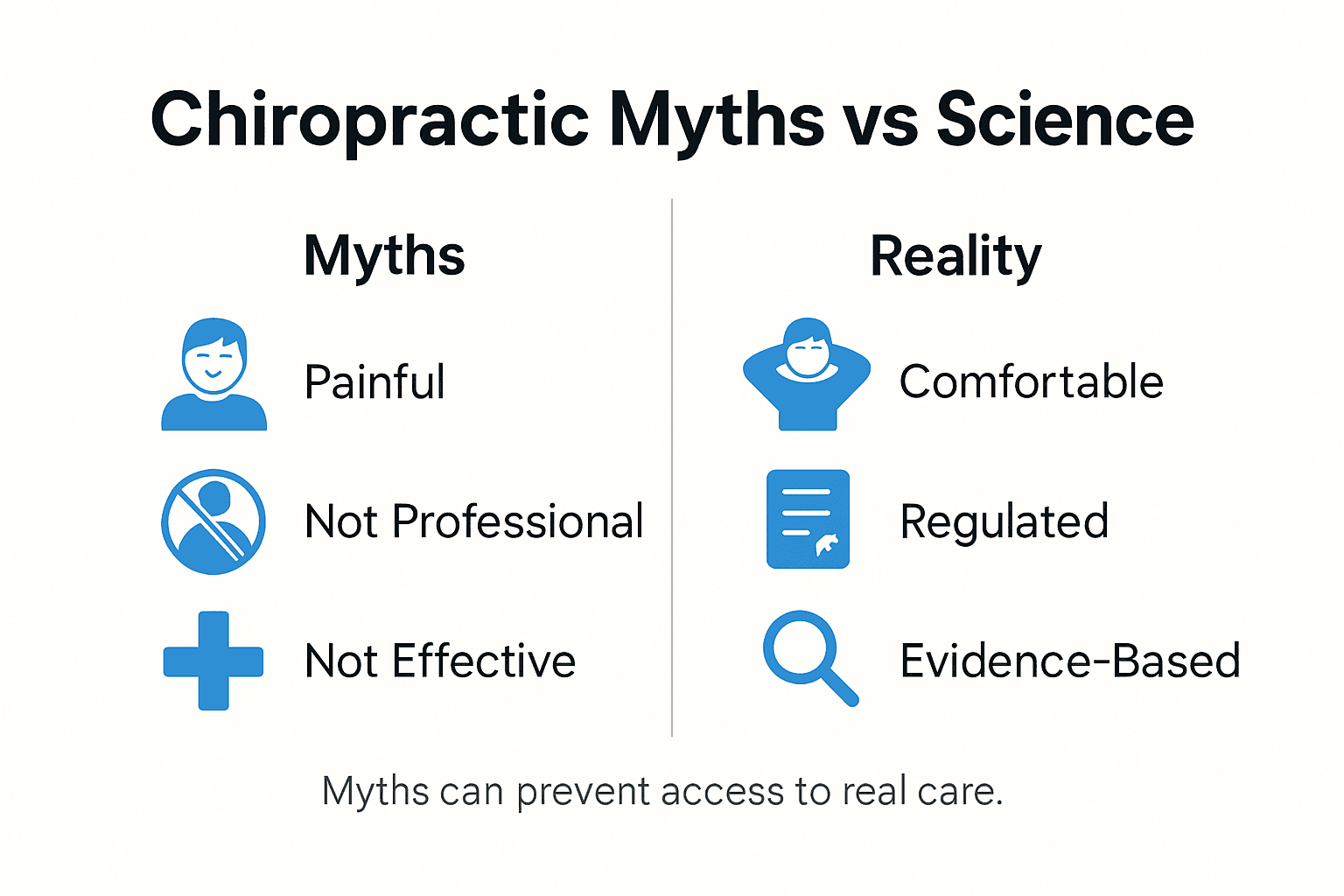
To clarify misconceptions, here’s a summary comparing common chiropractic myths with the reality:
Myth | Reality | Supporting Evidence |
Chiropractors are not medical professionals | Extensive academic and clinical training required | Licensing and regulatory standards in Canada |
Adjustments are always painful | Most adjustments cause minimal or no pain | Focus on patient comfort and safety |
Chiropractic care is only for back pain | Treats neck pain, headaches, joint issues | Broad range of musculoskeletal conditions |
Lacks credibility in medical community | Collaboration with other healthcare providers | Integrated, multidisciplinary care common |
Pro Treatment Tip: Before starting chiropractic treatment, schedule an initial consultation to discuss your specific health concerns and understand the potential benefits and approach tailored to your individual needs.
How Chiropractic Treatment Methods Work
Chiropractic treatment methods are sophisticated healthcare interventions designed to address musculoskeletal disorders through precise manual techniques. The science behind chiropractic adjustments involves intricate biomechanical and neurological principles that focus on restoring optimal spinal alignment and joint function.
At the core of chiropractic care are spinal manipulations, which involve carefully applied manual techniques to specific joints, particularly along the spinal column. These targeted adjustments aim to reduce pain, improve mobility, and enhance the body’s natural healing mechanisms. Chiropractors use their hands or specialized instruments to apply controlled, sudden force to particular joint regions, helping to realign vertebrae, release tension in surrounding muscles, and reduce nerve interference.

Chiropractic care employs a comprehensive approach to wellness that extends beyond simple pain management. Practitioners assess the entire musculoskeletal system, considering factors like posture, movement patterns, and lifestyle influences that might contribute to physical discomfort. Treatment methods can include not just spinal adjustments, but also soft tissue therapy, rehabilitative exercises, nutritional counselling, and ergonomic recommendations to support long-term health and prevent future injuries.
Here is a brief overview of the main types of chiropractic interventions and their primary benefits:
Treatment Method | Primary Focus | Key Benefits |
Spinal Manipulation | Spinal alignment | Pain reduction, improved mobility |
Soft Tissue Therapy | Muscle tension | Enhanced flexibility, decreased soreness |
Rehabilitative Exercises | Physical strength | Injury prevention, faster recovery |
Nutritional Counselling | Diet and lifestyle | Supports long-term wellness |
Pro Treatment Tip: Always communicate your complete medical history and current symptoms to your chiropractor, as this information helps them develop a personalised treatment strategy tailored to your specific physical needs and health goals.
Canadian Training, Licensing, And Standards
Chiropractic professionals in Canada undergo extensive and rigorous educational and professional preparation to ensure the highest standards of patient care. Aspiring chiropractors must complete a comprehensive academic journey that typically spans seven to eight years, including undergraduate prerequisites and specialized doctoral training in chiropractic medicine.
Educational Requirements for chiropractors in Canada are standardized and stringent. Students must first complete a minimum of three years of undergraduate studies, with most programs requiring a full bachelor’s degree emphasizing sciences like biology, chemistry, and human anatomy. Following undergraduate education, candidates must be accepted into an accredited Doctor of Chiropractic (DC) program, which represents an additional four-year intensive doctoral-level curriculum. These programs are exclusively offered at two institutions in Canada: the Canadian Memorial Chiropractic College in Toronto, Ontario, and the Université du Québec à Trois-Rivières in Quebec.
Professional licensing in Canada is managed by provincial regulatory bodies that maintain strict standards for practice. After completing their doctoral program, graduates must pass comprehensive national board examinations administered by the Canadian Chiropractic Examining Board. These rigorous assessments evaluate both theoretical knowledge and practical clinical skills. Additionally, chiropractors must register with their provincial regulatory college, which requires ongoing professional development, periodic competency assessments, and adherence to a comprehensive ethical code. This ensures that practitioners maintain current medical knowledge and provide safe, effective care to patients across different Canadian provinces.
Pro Treatment Insight: Verify your chiropractor’s credentials by checking their registration status with the provincial chiropractic regulatory college, which provides transparent information about their professional standing and qualifications.
Evidence: What Clinical Research Reveals
Clinical research provides increasingly robust insights into the effectiveness and safety of chiropractic care across various patient demographics and medical conditions. Comprehensive studies have explored chiropractic interventions for children, examining both musculoskeletal and non-musculoskeletal outcomes, highlighting the nuanced potential of these treatment approaches.
Recent research has particularly focused on understanding the safety and efficacy of chiropractic treatments for different age groups. Musculoskeletal pain management represents a critical area of investigation, with emerging evidence suggesting significant potential benefits. Medicare claims data analysis reveals promising findings about chiropractic care’s safety for older adults experiencing neck pain, indicating lower complication rates compared to traditional medical interventions.
Scientific investigations have systematically evaluated chiropractic care across multiple dimensions, including pain reduction, mobility improvement, and long-term health outcomes. Researchers have employed rigorous methodological approaches, including randomized controlled trials, longitudinal studies, and systematic reviews, to develop a comprehensive understanding of chiropractic treatment’s clinical effectiveness. These studies have consistently demonstrated potential benefits for conditions like lower back pain, neck discomfort, headaches, and joint-related mobility limitations.
Pro Research Tip: Always request evidence-based information from your healthcare provider and inquire about the specific research supporting recommended treatment approaches.
Safety, Risks, And Patient Collaboration
Chiropractic care is considered one of the safest healthcare interventions available, with extensive protocols designed to minimise potential risks and ensure patient well-being. Unlike more invasive medical treatments, chiropractic approaches emphasize non-surgical, drug-free strategies that focus on identifying and addressing the root causes of musculoskeletal discomfort.
Patient Safety Protocols are fundamental to chiropractic practice, involving comprehensive initial assessments that evaluate individual health histories, current physical conditions, and potential contraindications. Chiropractors conduct detailed examinations to determine the appropriateness of specific interventions, ensuring that treatment plans are tailored to each patient’s unique physiological requirements. While some adjustments might produce audible ‘cracking’ sounds, these are not indicative of pain or potential harm, but rather represent natural joint realignment processes.
Collaborative healthcare represents a critical component of contemporary chiropractic practice. Practitioners frequently work alongside medical doctors, physiotherapists, and other healthcare professionals to develop integrated treatment strategies. This multidisciplinary approach allows for comprehensive patient care, where chiropractic interventions are strategically combined with other medical approaches to optimize healing and recovery. Open communication between patients and healthcare providers ensures that treatment plans remain flexible, responsive, and aligned with individual health objectives.
Pro Safety Insight: Always disclose your complete medical history and any existing health conditions to your chiropractor, enabling them to design the most appropriate and safe treatment approach for your specific needs.
Discover Trusted Chiropractic Care Backed by Science
Are myths about chiropractic care holding you back from achieving true musculoskeletal health? Understanding that chiropractic treatments are safe, evidence-based, and tailored to individual needs is the first step to relief. At Integrate Ottawa, our team-based approach combines expert chiropractic care with physiotherapy and massage therapy to address pain, improve mobility, and promote holistic wellness.

Take control of your health today by booking a consultation at Integrate Ottawa. Experience compassionate care guided by research and delivered by licensed professionals committed to your long-term wellbeing. Don’t let misconceptions delay your journey to a pain-free life—start your path to recovery now.
Frequently Asked Questions
What is chiropractic care and how does it work?
Chiropractic care focuses on diagnosing and treating musculoskeletal disorders, primarily through manual adjustments and spinal manipulation. It aims to restore spinal alignment, improve mobility, and enhance the body’s natural healing processes.
Are chiropractic adjustments painful?
Most chiropractic adjustments cause minimal or no pain and are performed with a focus on patient comfort and safety. Patients often experience relief immediately following the treatment.
What conditions can chiropractic care help with?
Chiropractic care is effective for various musculoskeletal issues, including back pain, neck pain, headaches, and joint mobility problems, making it a holistic approach to wellness beyond just back discomfort.
How are chiropractors trained and licensed?
Chiropractors complete extensive education that includes a minimum of seven to eight years of post-secondary training. After obtaining their Doctor of Chiropractic degree, they must pass national board examinations and register with provincial regulatory authorities.
Recommended


Comments